Criticalista has moved – you will be redirected to http://criticalista.com

Criticalista: Jean Nouvel
Showing posts with label Jean Nouvel. Show all posts

2013/11/20

Hotel Agbar

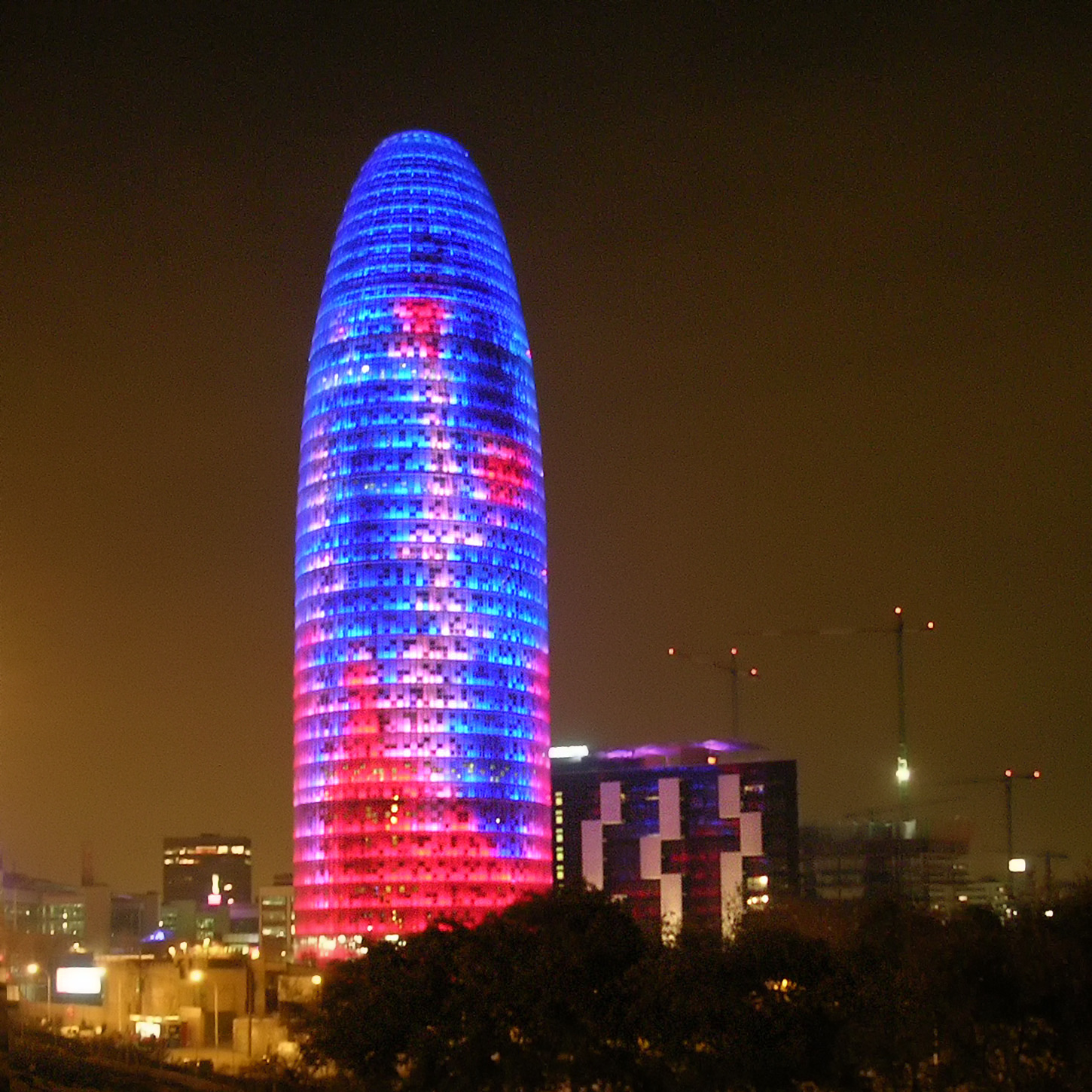
image courtesy Wikipedia 
Barcelona's La Vanguardia newspaper reported three days ago that the Agbar Tower, an office building designed by Jean Nouvel and completed in 2005, is to be converted into a luxury hotel. The news should come as no surprise. Architecture has been responding better to the demands of tourists than those of workers or dwellers for some time now.

La Torre Agbar was specifically designed as the headquarters of the Agbar water company, hence Nouvel's geyser metaphor, but this company only occupied a portion of the building, renting the rest of its floor space out to other businesses (which is typically the case with corporate headquarter buildings, as we know from Carol Willis's book Form Follows Finance). The tenants didn't stay very long, and the Agbar company found itself alone with floor space it couldn't rent out. The building works wonders as an icon, but it obviously fails as an office building.

top floor of Agbar tower

Along comes the Hyatt Grand Hotel chain to the rescue. Their renovation plan foresees two entrances: one for hotel clients, and another for architectural tourists, which they estimate will number around one and a half million per year. Express elevators will whisk camera-toting, ticket-paying sightseers to the very top of the building, where they will be able to photograph the urban panorama of Barcelona, including the nearby Sagrada Familia temple, to their hearts' delight.

The transformation of this icon from workplace to tourist attraction provides evidence of another, much larger, transformation. Architecture has over the last decade or two become an important component of the tourism and leisure industry. It is something that we visit in our travels or take in at Saturday sports matches or Sunday museum outings. Barcelona is where this shift is most palpable. Once an important industrial city, it is now a tourist mecca. In addition to a thriving 'tourism of architecture' (Gaudí, Mies, Sert, Catalan Civil Gothic, etc.), more recently this city has also become specialized in building an 'architecture of tourism'. When completed, the Grand Hotel Agbar will probably exemplify this new typology perfectly.

2012/12/19

Garden and Gaffe: A Hotel by Jean Nouvel


“The city is like some large house and the house in turn like some small city”
-Leon Battista Alberti

If there is one type of "house" that comes closest to Alberti’s “small city”, then surely it is the hotel. Like a city, a hotel is comprised of both private “residential” space (in this case temporary residences) and relatively public functions; the private realm making up the representative bulk and consisting of largely repetitive units while the more public lobby, conference spaces, restaurant, and so on are monumental, singular spaces of representation. The ultimate mixed-use building type, a hotel is a place where guests stay for a variety of reasons, be it a travelling sales rep hoping to strike a business deal, illicit lovers having an affair, criminals evading the police, academics at a conference, or spies on an intelligence-gathering mission. Anything can and everything has happened in hotels: Watergate, John Lennon and Yoko Ono’s Bed-ins for Peace, Dominique Strauss Kahn.

It is no surprise, then, that the hotel has become in recent times one of the most architecturally reinvigorated types of buildings. The drab, beige hotel of the nineteen seventies and eighties, where sameness, familiarity and the offer of a cozy “home away from home” was the ideal, is seemingly a thing of the past. Hotels have instead become places where people seek a memorable experience that is precisely different from the familiarity and routine humdrum of home. As an “experience” space available to a majority of people, the hotel can also be seen as a democratization of the pleasure palaces of the aristocracy of previous centuries.

The Renaissance Barcelona Fira Hotel by Jean Novel and Ribas & Ribas is, like many palaces, characterized principally by a garden, that most sensuous space of pleasure and temptation since biblical times. This garden, however, climbs up a 26 story high atrium space that is completely open to the exterior on one of the sides of the tower, which forms a “U” shaped floor plan in which the rooms are accessed by garden-facing galleries that are open during three seasons of the year, and that are separated from the garden in winter by means of transparent roll-down barriers.

A single staircase climbs up the atrium along a different trajectory at each level change, connecting galleries as well as bridges, platforms, and a over a hundred planter boxes containing ten different varieties of palm trees and other plant species. It is a delirious, seemingly endless space that would make Giovanni Battista Piranesi proud, and which redefines the late-modern hotel atrium made famous by architect-developer John Portman.

It is the exterior openness of this atrium that sets it apart from any of  John Portman’s, however. In this atrium, there is no wall-to-wall carpeting, no chrome, and no air conditioning. Instead, there is a gentle breeze and the sounds and framed view of a city beyond. The leaves of the palm trees move in the breeze, and the hotel rooms open directly onto an exterior garden and not into a long, dim, anonymous corridor, making it tempting for guests to leave the door open when in their rooms.

Unfortunately, however, the theme of “palm tree” has been taken by its architect just a little too far. The palm tree-shaped windows of most of the rooms are gimmicky and goofy. A gaffe. Those windows are precisely why it’s a good thing the doors of the hotel rooms open directly onto the memorable garden--and city--outside.