Criticalista has moved – you will be redirected to http://criticalista.com

Criticalista: adaptive re-use
Showing posts with label adaptive re-use. Show all posts

2013/11/28

Old Buildings, New Buildings


"I don’t know whether we should be designating heritage buildings." -Frank O. Gehry

Why is preserving old buildings only ever a question of heritage? Shouldn't we be maintaining and re-using whatever buildings can be salvaged for environmental reasons at this point? It is known that construction is one of the biggest causes of human CO2 emissions, up there with industry, agriculture, and transportation. There is also growing alarm about sand depletion, the main cause of which is construction. To say nothing of land depletion, sprawl, and the mind-numbing boringness of the vast majority of new buildings--including many "interesting" ones.

If construction is a major environmental problem, then how about over-construction? In Spain alone, it is estimated that 818 000 dwellings built during the boom are sitting empty and looking for a buyer. It should be obvious by now that most new construction is undertaken for purposes of financial speculation--not satisfying any real need.

Re-purposing old buildings that are sitting empty, of which there is no shortage, instead of building anew, which in many cases merely leads to more buildings sitting empty, seems to make increasing sense. But since when does architecture have anything to do with making sense? Well, perhaps the time has come. Better late than never.

As architects, our duty is first and foremost to improve our habitat, or so we like to think. In some cases, this is indeed best done with new construction, but in most cases now, this is best done by not building anew, and instead preserving and adaptively re-using old buildings.  In more ways than one, the city of the future will be the city of the past, and architecture will have more and more to do with intervening creatively within existing structures, and less and less to do with building new ones.

Let's not forget, while we're on the subject of old buildings, that Frank Gehry's greatest contribution to architecture is still that little suburban house in Santa Monica that he so lovingly and beautifully renovated in the late 1970s. That old house wasn't preserved back then for reasons of heritage. Well, now there are even more reasons for preserving old buildings that have nothing to do with heritage.

2013/11/20

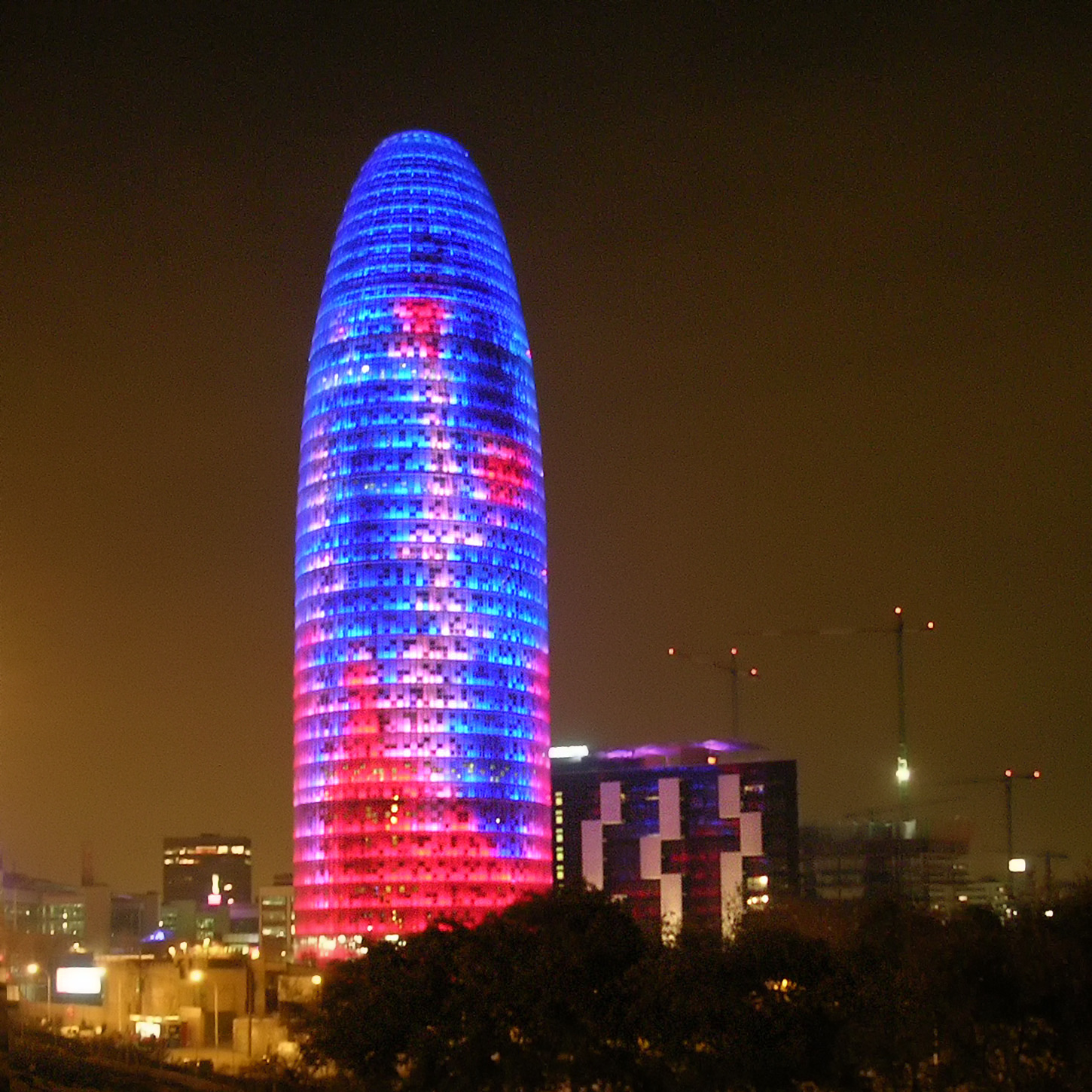
Hotel Agbar

image courtesy Wikipedia 
Barcelona's La Vanguardia newspaper reported three days ago that the Agbar Tower, an office building designed by Jean Nouvel and completed in 2005, is to be converted into a luxury hotel. The news should come as no surprise. Architecture has been responding better to the demands of tourists than those of workers or dwellers for some time now.

La Torre Agbar was specifically designed as the headquarters of the Agbar water company, hence Nouvel's geyser metaphor, but this company only occupied a portion of the building, renting the rest of its floor space out to other businesses (which is typically the case with corporate headquarter buildings, as we know from Carol Willis's book Form Follows Finance). The tenants didn't stay very long, and the Agbar company found itself alone with floor space it couldn't rent out. The building works wonders as an icon, but it obviously fails as an office building.

top floor of Agbar tower

Along comes the Hyatt Grand Hotel chain to the rescue. Their renovation plan foresees two entrances: one for hotel clients, and another for architectural tourists, which they estimate will number around one and a half million per year. Express elevators will whisk camera-toting, ticket-paying sightseers to the very top of the building, where they will be able to photograph the urban panorama of Barcelona, including the nearby Sagrada Familia temple, to their hearts' delight.

The transformation of this icon from workplace to tourist attraction provides evidence of another, much larger, transformation. Architecture has over the last decade or two become an important component of the tourism and leisure industry. It is something that we visit in our travels or take in at Saturday sports matches or Sunday museum outings. Barcelona is where this shift is most palpable. Once an important industrial city, it is now a tourist mecca. In addition to a thriving 'tourism of architecture' (Gaudí, Mies, Sert, Catalan Civil Gothic, etc.), more recently this city has also become specialized in building an 'architecture of tourism'. When completed, the Grand Hotel Agbar will probably exemplify this new typology perfectly.